
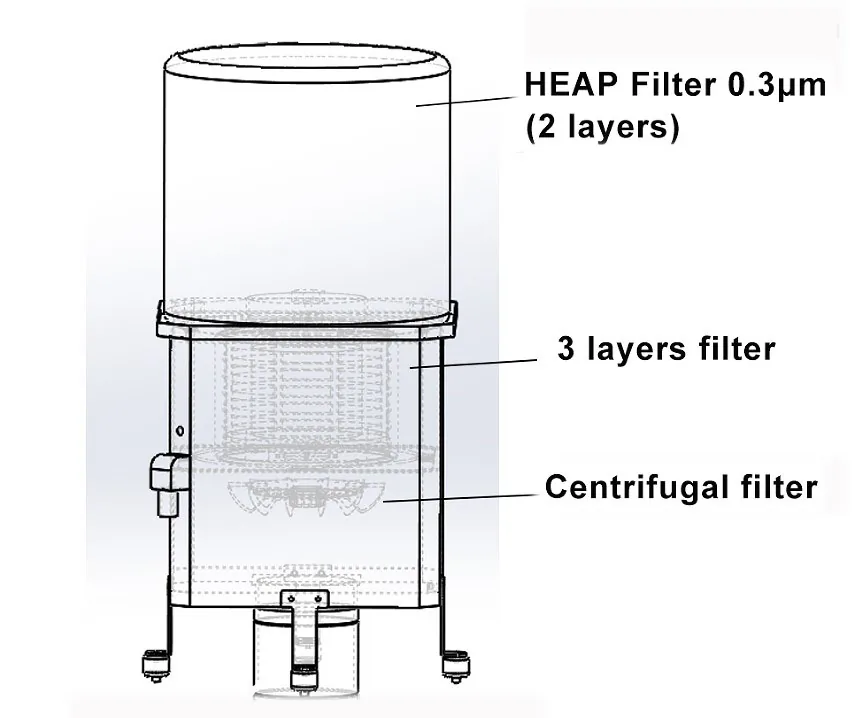
Oil mist can escape from a CNC machine during cutting, drilling, turning, or grinding. It can leave residue on nearby surfaces and make the work area less pleasant. An oil mist collector helps draw contaminated air from the machine enclosure so it can be treated before it spreads.
The best collector depends on your machine and process. Start with the points below, then send TINME your details for a recommendation.
1. Check your process
Tell us what your CNC machine does and what fluid it uses. Please include the machine model, coolant or cutting oil, operating hours, and photos of the enclosure.
Different fluids and machining processes can create different types and amounts of mist. TINME engineering must confirm the final solution for your application.
2. Capture mist at the machine
The collector should be connected where it can draw air from the enclosure without getting in the way of normal operation or maintenance.
The inlet position, duct route, and final installation layout must be checked before installation.
3. Do not choose by airflow alone
Airflow matters, but it is only one part of the decision. The enclosure, ducting, fluid, and working pattern also matter. A larger number is not automatically the better choice.
TINME must confirm the right model and final airflow from approved product data and the real machine conditions.
4. Leave room for service
Plan enough space to inspect the collector and perform routine maintenance. Check the mounting position, drainage route, power connection, and access to service parts before ordering.
Drainage, mounting, maintenance intervals, and site safety requirements must be confirmed for each installation.
5. Choose options after a technical review
Some CNC applications may need additional filtration or monitoring options. These should be chosen after the process and site conditions are reviewed.
Confirm filter stages, optional HEPA, monitoring features, performance figures, certificates, and maintenance requirements in current TINME technical documents before making a customer-facing claim.
What to send TINME
– CNC machine make and model
– Photos of the machine and available installation space
– Process type and coolant or cutting oil
– Working hours per day
– Any visible mist, smoke, odor, or residue
– Existing ducting and site requirements
With this information, TINME can help you compare suitable options. You can also read our guides on [how a centrifugal oil mist collector works] and [comparing centrifugal and electrostatic collectors].
Frequently asked questions
Can I choose a collector from the CNC model alone?
Not yet. The machine model is a useful start, but the process, fluid, enclosure, and installation also need review.
Is the highest airflow always the best choice?
No. The best choice depends on the complete system, not one number.
Can one collector serve several machines?
It may be possible, but it needs a site-specific engineering review.
Request a CNC mist collection review
Send TINME your machine details and photos. We will help you review suitable oil mist collector options.
Discuss Your CNC Oil Mist Application
Send the machine type, enclosure size, coolant, operating conditions and available power supply for model-selection support.
Request Application Advice